
A Comprehensive Guide to Building Focus, Routine, and Lifelong Independence at Home
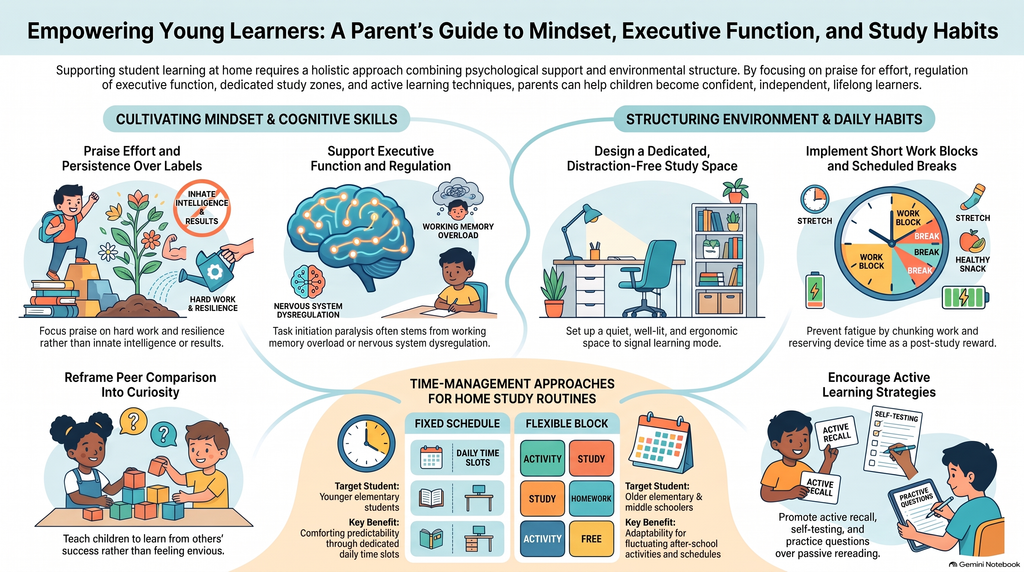
Developing good study habits in children is about much more than sitting at a desk for hours or chasing perfect exam scores. The true goal is equipping children with essential time management, focus, active recall, and independent learning skills so they can take charge of their own education.
A parent’s role naturally evolves as a child grows: starting with hands-on structure in early childhood, moving to periodic guidance in middle school, and eventually transitioning into supportive check-ins as teenagers manage their own learning. If you want to foster lasting, self-driven academic habits in your child, implement these evidence-based strategies:
1. Create a Dedicated and Organized Study Space
A child’s physical environment directly impacts their concentration, learning depth, and mental clarity.
- Distraction-Free Zone: Set up a quiet, consistent workspace away from television noise, high-traffic household areas, and clutter. Entering a dedicated “study zone” signals to the brain that it is time to switch into focused learning mode.
- Ergonomic Setup: Choose a comfortable chair and desk suited to your child’s height, ensuring their elbows rest comfortably at a 90-degree angle while writing or typing.
- Clutter-Free Supplies: Keep necessary stationery, notebooks, and reference materials organized and within arm’s reach before starting. Physical clutter competes for attention and breaks concentration.
- Optimal Lighting: Combine natural light with warm white artificial task lighting (like an adjustable desk lamp) to reduce eye strain and maintain alertness.
2. Establish a Predictable Daily Routine
Having a set schedule eliminates daily power struggles and reduces procrastination by making studying an expected part of the day.
- Fixed vs. Flexible Scheduling: Younger elementary students thrive on fixed, non-negotiable study time slots (e.g., 4:00 PM to 5:00 PM). Older students with fluctuating extracurriculars benefit from flexible block scheduling (e.g., a 2-hour window between 3:30 PM and 6:00 PM).
- Set Specific Goals: Vague instructions like “study science” lead to confusion. Guide your child to set specific, actionable tasks, such as “revise the chapter on nutrition and answer 10 practice questions”.
- The “Three Priorities” Method: Have your child select just three key priorities for each study block. Ticking off manageable goals builds momentum and self-efficacy.
- Tackle Hard Tasks First: Encourage children to complete the most challenging assignments at the start of their session when their brain is most alert.
3. Use Age-Appropriate Focus Blocks: The Pomodoro Technique
Long, uninterrupted study sessions often lead to mental fatigue and frustration. The Pomodoro Technique breaks work into short, structured intervals paired with brief breaks to sustain cognitive energy:
| Age Group | Focus Block (Work Interval) | Short Break |
|---|---|---|
| Ages 4–6 | 10–12 Minutes | 3–5 Minutes |
| Ages 7–9 | 12–15 Minutes | 3–5 Minutes |
| Ages 10–12 | 15–20 Minutes | 3–5 Minutes |
- Visual Timers: Use a physical or visual countdown timer so children can see time passing, which lowers anxiety and turns focus into an engaging challenge.
- Structured Breaks: Short 3–5 minute breaks should involve light physical movement (stretching, grabbing water) to reset attention.
- Long Breaks: After completing 3–4 Pomodoro intervals, allow a longer 15–30 minute break for rest, snacks, or outdoor play to prevent burnout.
4. Encourage Active Learning Strategies
Passively re-reading textbooks creates a false sense of mastery. Help your child adopt active learning techniques that strengthen memory consolidation:
- Active Recall: After reading a section, have your child close the book and explain the main concepts in their own words or quiz themselves.
- Spaced Revision: Review material periodically over days and weeks rather than cramming the night before an exam.
- Maintain a “Mistake Notebook”: Keep a dedicated notebook to record and review recurring errors in math, science, or grammar.
- Guide, Don’t Give Answers: When your child gets stuck, ask guiding questions to diagnose the problem rather than giving direct answers. Doing the work for them hinders independent problem-solving skills.
5. Manage Screen Time and Digital Distractions
While digital tools enhance research and learning, unchecked notifications quickly shatter deep focus.
- Separate Learning Tech from Entertainment: Distinguish between productive device use (digital textbooks, research) and recreational distractions (social media, gaming).
- Out-of-Sight Placement: Place smartphones or non-essential devices on silent in another room during study blocks.
- Screens as Rewards: Allow 10–15 minutes of recreational screen time after a successful study session as a positive reinforcement tool.
6. Foster a Growth Mindset (Praise the Process)
According to Stanford psychologist Carol Dweck, a child’s belief about their intelligence profoundly affects their academic resilience.
- Praise Effort, Not Talent: Avoid labeling children with fixed traits like “smart” or “gifted”. Instead, praise specific efforts, persistence, and strategies (e.g., “I love how hard you worked to solve that tough math problem!”).
- The Power of “Yet”: If your child says, “I can’t do this,” teach them to reframe it by adding the word “yet”—e.g., “You haven’t mastered this concept yet”.
- View Mistakes as Learning Opportunities: Frame errors as natural stepping stones in the brain’s learning process rather than failures.
7. Prioritize Physical Health and Parent-Teacher Collaboration
A child who is sleep-deprived or anxious cannot access high-level executive functions like planning and concentration.
- Sleep & Nutrition: Ensure consistent, full night’s sleep and balanced, nutritious meals to keep mental stamina steady.
- Open Teacher Communication: Maintain two-way communication with your child’s teachers to align learning strategies at home with classroom goals and catch challenges early.
Summary Checklist for Parents
- [x] Set up a quiet, well-lit, ergonomic study space.
- [x] Establish a consistent daily study routine with realistic goals.
- [x] Use visual Pomodoro timers and active recall methods.
- [x] Keep recreational screens out of the study area during work blocks.
- [x] Praise effort, persistence, and strategy over marks alone.